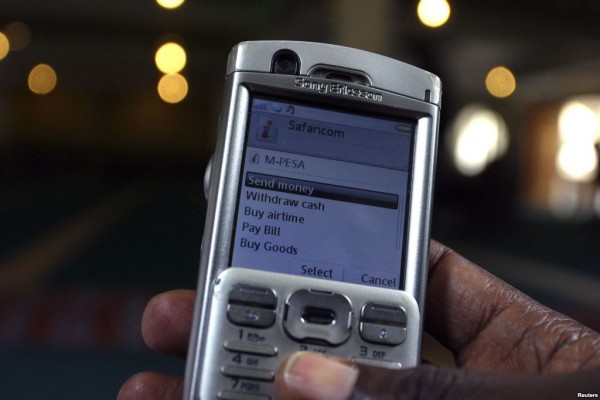
A Kenyan startup, BitPesa, which is seeking to have an impact in the global remittance business, said it has raised $1.1 million in a second round of funding from Pantera Capital of San Francisco. The CEO and founder of Pantera, Dan Morehad has joined BitPesa’s board. BitPesa has raised a total of $1.7 million. The startup began last spring with the U.K.-Kenya business. Currently it has operations in Ghana and is planning further expansion to Tanzania and Uganda this year.
Michelle Ferrier, dean of innovation at Ohio University Scripps College of Communication, and her team won acknowledgement at the Louisa Reynolds International Women’s Media Foundation Hackathon in late January in New York City. Ferrier’s group won recognition for offering pest control solutions for women online publishers. The team showed that online harassment reaches 40 percent of women online and is growing. Their research showed that women journalist are targeted online. To help deter these problems the groups has a S.O.S. Team which will counter cyberattacks in real-time with online community support and positive messaging.
Tom Wheeler, chairman of the Federal Communications Commission.
The Federal Communications Commission (FCC) is near making a proposal to regulate the Internet like it were a public utility. According to The New York Times, industry analysts, lobbyists, and former members of the FCC are saying the commission will reclassify broadband service as a Title II telecommunications service. This action would give the FCC broader powers to make sure Internet service providers don’t sell faster Internet service to larger and richer customers for higher prices at the expense of smaller Internet companies.
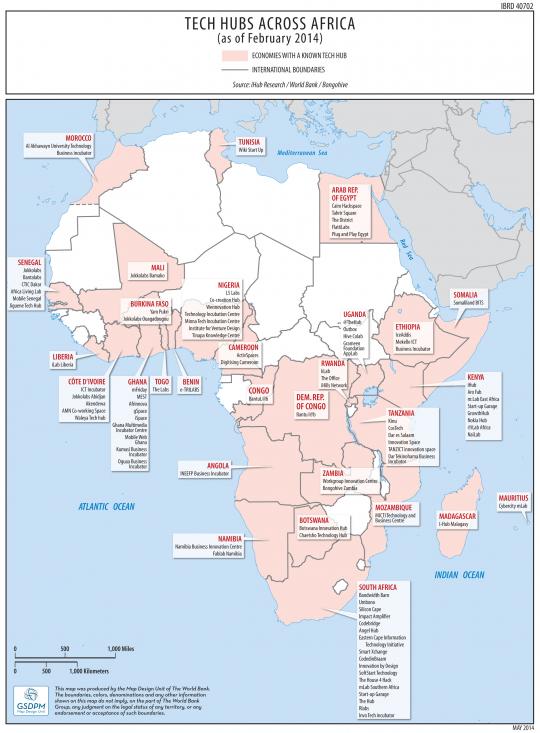
A map shows the proliferating tech hubs in Africa.
Foreign technology giants such as Microsoft, Google and IBM are moving into Africa, a continent they reportedly consider, “the next frontiers” in the technology market. Mo Ibrahim, one of the foremost supporters of technological revolution in Africa, has said, “It’s now easier, technically speaking, to supply a village with Internet access than with clean water.”
Pundits look at innovations in digital technologies as one of the main contributing factor to Africa’s rising economic prospects. Some technology websites and blogs have made lists of the leading African countries in information and communications technology innovation and adoption. The prevailing pattern is that African countries and their innovators are increasingly using information and communications technologies to fuel development, education, free enterprise and innovation.
For instance, in Kenya, tech entrepreneurs have an innovation space that is called “Silicon Savannah,” or “iHub” where best ideas converge to produce technological advances. Mpesa (Swahili for mobile money), which “turns mobile phones into a bank account, credit card and wallet in one,” is so significant in Kenya that it has become a platform for a third of Kenya’s economy. Gaming innovation is another area where technology plays huge role in Kenya. People with artistic inclination on the continent are also turning to technology to crate and share their digital arts.
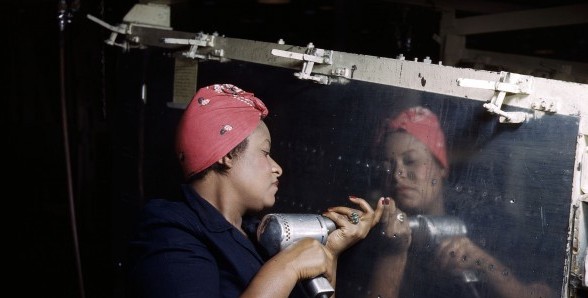
Jack Ma, the founder and executive chairman of the Chinese e-commerce behemoth Alibaba, clearly understands the importance of workplace diversity for technology companies. He describes hiring a large number of women as “the secret sauces” of his company’s success. The reason women are important drivers of technological advances, Jack Ma says, is “Women think about others more than themselves.” He thinks that has a profound impact on Alibaba and the way it delivers services to users. Coming from a Chinese technology billionaire and leader from the East, the experience the Alibaba chief shared with participants of the 2015 World Economic Forum in Davos, Switzerland, is very significant.