Rise of African women in technology

Groundbreaking technology by women, for women

By Bo Li
United Nations Africa Renewal

There was a time when technology was a male-dominated field. However, with the advancement of science, technology, engineering and math (STEM) education, ICT infrastructure and availability of capital for start-ups, the past decade has witnessed the rise of a new generation of IT girls and “cyberellas” in Africa.

A growing number of them are reaching the top of the industry as entrepreneurs.

Sub-Saharan Africa has the highest regional female Total Entrepreneurial Activity (TEA) rate in the world, with 27% of its female population engaged in entrepreneurship activities, according to the 2012 Women’s Report by the Global Entrepreneurial Monitor (GEM).

This year, Catherine Mahugu of Kenya, Teresa Mbagaya (Kenyan in Zimbabwe), Clarisse Iribagize (Rwanda), Julie Alexander Fourie (South Africa) and Uche Pedro (Nigeria) were listed among the most promising young African entrepreneurs by Forbes, a US business magazine. Aged between 26 and 30, all of them are founders of businesses specialized in the most cutting-edge technologies, such as e-commerce, mobile applications and cloud storage.

Soko, which means ‘marketplace’ in Swahili, is an online platform connecting international shoppers to handcrafted accessories from the developing world. It is one example of tech companies by women for women. Founded by 27-year-old Catherine Mahugu, it enables talented artisans in emerging economies, who are mostly women, to promote and sell craftworks using basic mobile phones. The mobile-to-web technology gives women direct access to the global marketplace, and helps transform them from manufacturers to entrepreneurs.

Teresa Mbagaya, the head of Econet Education, launched several educational programmes with mobile technology in Zimbabwe, including the EcoSchool project. Through the use of tablets and the EcoSchool app (software programme) designed by Ms. Mbagaya’s company, Econet, students were given on-the-go and affordable access to world-class educational resources.

The EcoSchool app significantly improved the learning experience of girls who lived off campus and could not stay late in libraries. With light-weight portable devices they were able to study after school and pay as little as $5 per month for the studying materials.

Recent years also saw the emergence of “girls’ clubs” for women in science and technology in several African countries. Ethel Cofie, Judith Owigar and other like-minded female tech entrepreneurs created organizations like AkiraChix (Kenya), Tech Needs Girls (Ghana) and Asikana Network (Zambia), where female techies meet up for action-packed workshops, trainings and networking events. These organizations also aim to change perceptions of women and girls pursuing education and careers in STEM subjects, paving the way for more to venture into innovation and technology.

A study by Icteum Consulting, Meraka Institute/CSIR titled “Women in the Information and Communication Technology Sector in South Africa” found that in core IT categories, women were over-represented in technical sales and system analyst positions, while being drastically under-represented in programming, engineering and management.

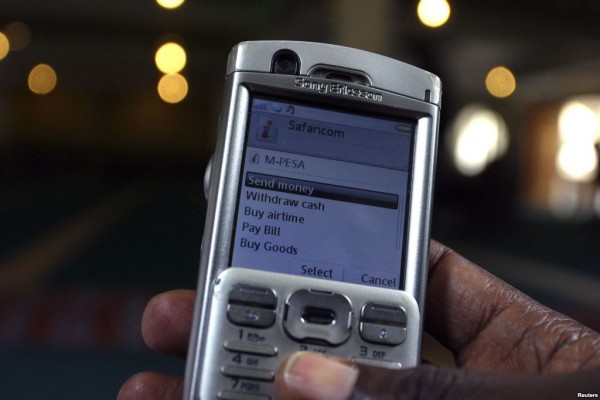
 

Report says 12 percent of Africans use phones for non-bank transactions


Twelve percent of all adults in sub-Saharan Africa use their phones for non-bank financial transactions, by far the highest rate of any region in the world, according to a report released Wednesday by the World Bank. These figures come from the World Bank’s Global Financial Inclusion database, known as the Findex.  The mobile revolution there is part of a broader trend of democratization of finance around the globe that’s giving far more people a first step into the financial world. The number of adults worldwide with a bank account grew by 700 million between 2011 and 2014, according to the World Bank, an 11 percentage point rise to 62 percent of all adults.

Former Microsoft manager seeks to build Ghanaian university


Former Microsoft program manager, Patrick Awuah decided to leave one influential job to maybe begin something to have broader impact. Awuah has moved back to Ghana to start Asheshi University.  “Africa needs to have a renaissance,” said Awuah, as he explains his decision.  He said he wants to contribute towards the development in Africa  so he would build a university.  The University would be a state-of-the-art education hub that would help educate the country’s next generation of leaders.


Kenyan startup to expand remittance business

A Kenyan startup, BitPesa,  which is seeking to have an impact in the global remittance business, said it has raised $1.1 million in a second round of funding from Pantera Capital of San Francisco. The CEO and founder of Pantera, Dan Morehad  has joined BitPesa’s board. BitPesa has raised a total of $1.7 million.  The startup began last spring with the U.K.-Kenya business. Currently it has operations in Ghana and is planning further expansion to Tanzania and Uganda this year.


Are African countries the next tech frontier?

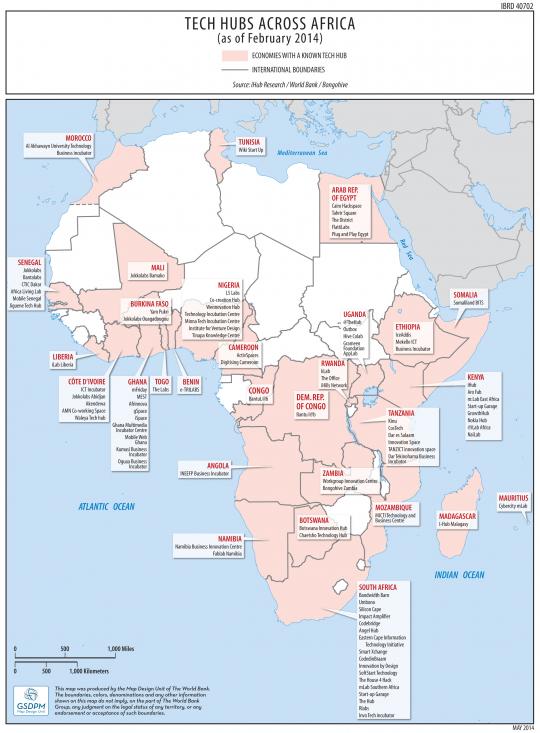
Kelly_Techhubs in Africa World Bank Blog by Map Design Unit of the World Bank
A map shows the proliferating tech hubs in Africa.

Foreign technology giants such as Microsoft, Google and IBM are moving into Africa, a continent they reportedly consider, “the next frontiers” in the technology market.  Mo Ibrahim, one of the foremost supporters of technological revolution in Africa, has said, “It’s now easier, technically speaking,  to supply a village with Internet access than with clean water.”

Pundits look at innovations in digital technologies as one of the main contributing factor to Africa’s rising economic prospects. Some technology websites and blogs have made lists of the leading African countries in information and communications technology innovation and adoption. The prevailing pattern is that African countries and their innovators are increasingly using information and communications technologies to fuel development, education, free enterprise and innovation.

For instance, in Kenya, tech entrepreneurs have an innovation space that is called “Silicon Savannah,” or “iHub” where best ideas converge to produce technological advances. Mpesa (Swahili for mobile money), which “turns mobile phones into a bank account, credit card and wallet in one,”  is so significant in Kenya that it has become a platform for a third of Kenya’s economy. Gaming innovation is another area where technology plays huge role in Kenya. People with artistic inclination on the continent are also turning to technology to crate and share their digital arts.